
March 23, 1965. Two hours into Gemini 3, pilot John Young famously produced a contraband corned-beef sandwich. Crumbs immediately drifted through the cabin—a vivid reminder that space meals must be engineered to avoid debris. The episode even prompted questions on the ground after splashdown. [1]
From tubes to “eating like home”
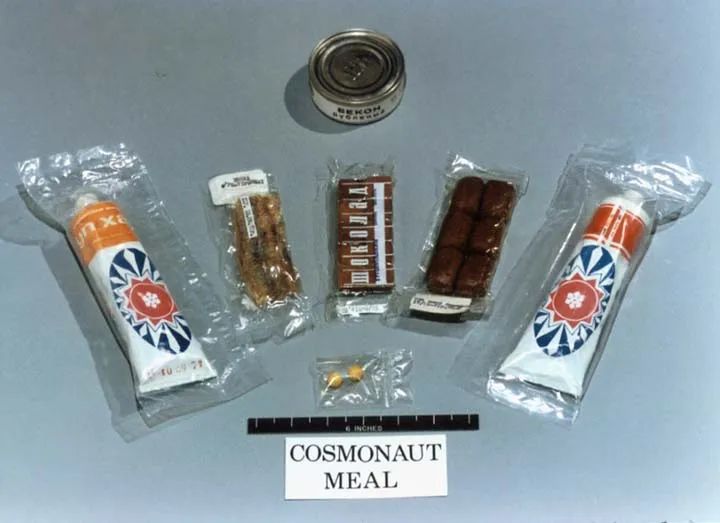
Before the first orbits, scientists weren’t sure people could swallow without gravity. In 1962, John Glenn settled the question by squeezing applesauce from a tube on Friendship 7; that very package now lives in the National Air and Space Museum. [5]
As missions grew longer, packaging and preparation improved: gelatin-coated cubes gave way to broader menus of rehydratable entrées, beverages, and better dispensers. Hot water systems during Apollo further boosted palatability and speed. BBC Future’s Apollo retrospective notes crews managed without ovens, leaned on rehydration, and longed for fresh produce—threads that continue to shape menu planning today. [3][9]
What’s actually on the tray
Core categories
- Rehydratable / freeze-dried (add water; e.g., porridges, eggs, pasta).
- Thermostabilized (retort-processed pouches/bowls: stews, fish, vegetables).
- Irradiated meats (selected items for safety).
- Intermediate-moisture snacks (jerky, cake bites).
- Natural-form & fresh (nuts, candy, fruit cups; occasional fresh treats with cargo).
NASA tailors these categories by vehicle and mission. [3]
Why tortillas, not sliced bread
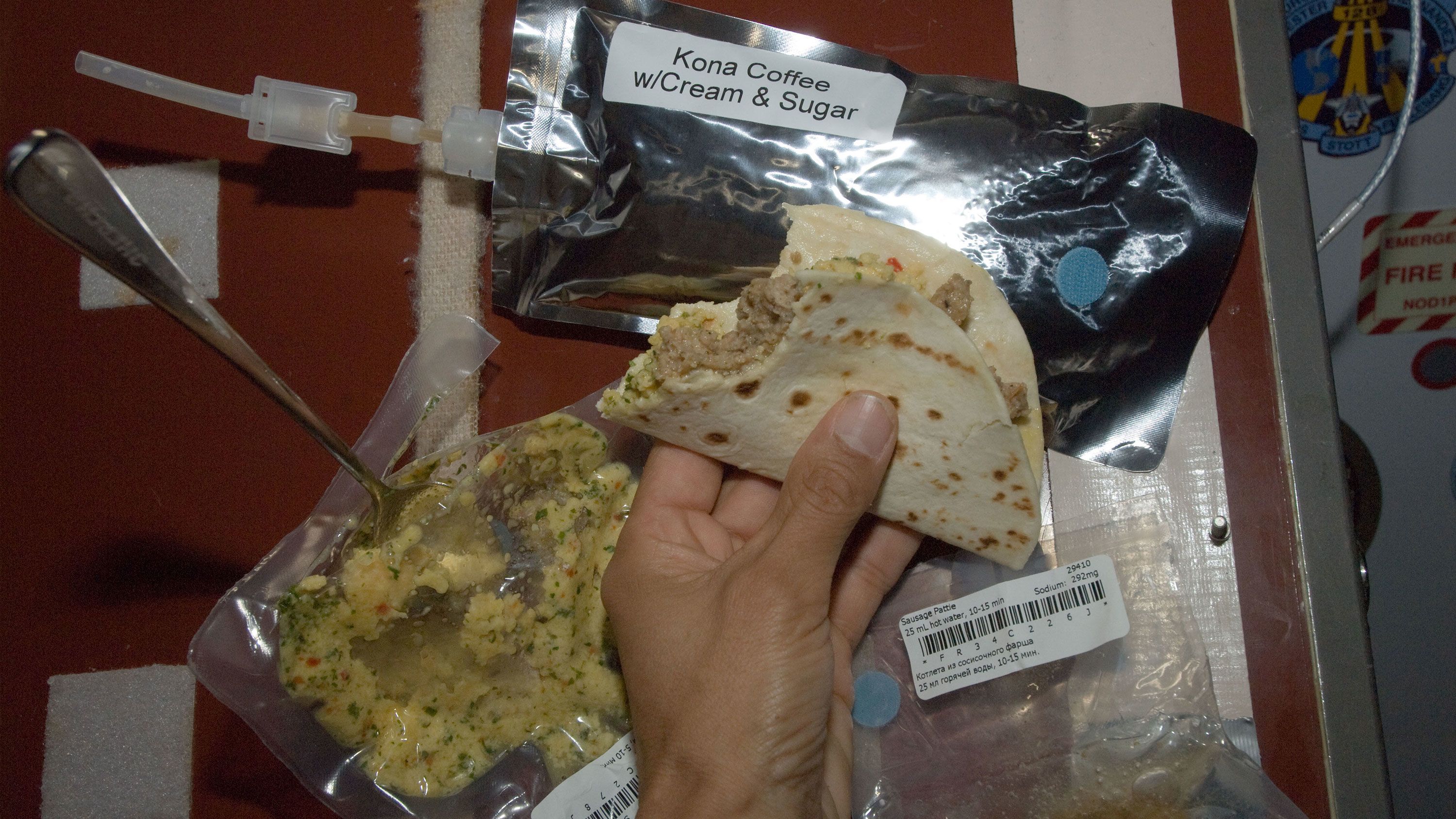
Crumb control. Tortillas hold fillings without littering the cabin, so they’ve become a long-running favourite aboard the ISS for burritos, burgers, and PB&J. [4]
Freeze-drying: the upside—and the limits
Freeze-drying removes nearly all water by sublimation under vacuum. Compared with conventional dehydration, it generally rehydrates faster and retains flavour, colour, and key nutrients better—one reason it’s been central from Gemini/Apollo onward and a notable NASA spinoff on Earth. [2]
Shelf life is finite. NASA studies show that only a fraction of thermostabilized entrées are still truly palatable at five years, and vitamin loss is a concern. Current research combines packaging, atmosphere control, processing, and recipe design to reach three-to-five-year targets for deep-space travel; without such advances, many freeze-dried items are best within about two years at room temperature. [6][7]
Not just one nation’s menu
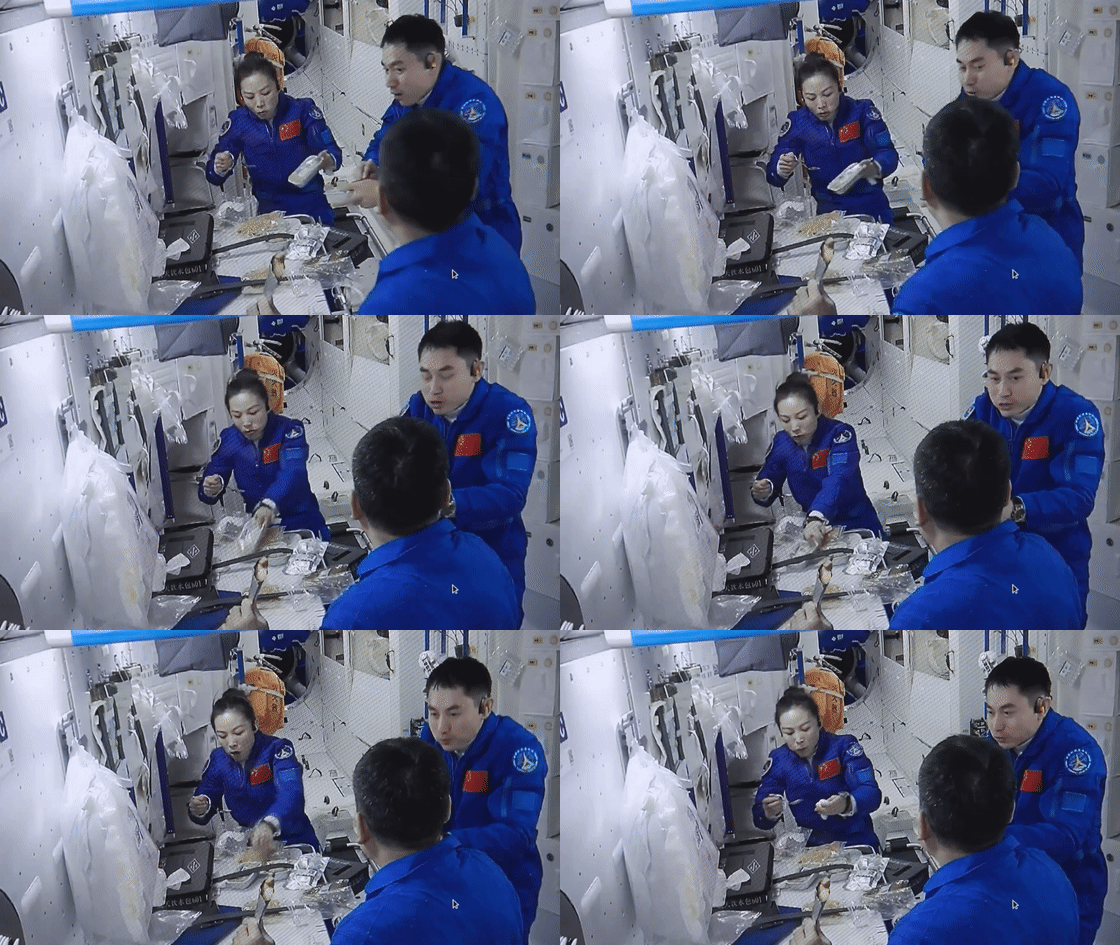
Space menus now reflect culture as well as physiology: comfort foods matter. China’s crews have shown New-Year dumplings and everyday favourites on orbit, underscoring how better storage and heating make “home-style” meals possible far from home. [8]
FAQ
Which foods are available?
A practical mix of rehydratable/freeze-dried entrées and drinks, thermostabilized pouches, some irradiated meats, intermediate-moisture snacks, and natural-form items. Chilled or fresh items appear with resupply, and tortillas often stand in for bread. [3][4]
Can people swallow and digest without gravity?
Yes—early flights verified it (most famously with applesauce). Taste may feel muted and motion sickness can occur, but menu design and monitoring keep intake on track. [5]
References & Further Reading
- NASA. Fallout from the Unauthorized Gemini III Space Sandwich. Link
- NASA Spinoff (2020). Freeze-Dried Foods Nourish Adventurers and the Imagination. Link
- NASA. Space Food (factsheet/educator packet). Link
- NASA. Space Station 20th: Food on ISS (why tortillas beat bread). Link
- National Air and Space Museum. Space Food, Applesauce, Friendship 7 (swallowing in zero-G). Link
- NASA (2024). We Have a Challenge and It’s Food Packaging (palatability at five years; vitamin loss). Link
- NASA NTRS (2022). Improvement of Shelf Life for Space Food Through a Hurdle Approach. Link
- CGTN (2021). New footage shows Chinese astronauts dining in space. Link
- BBC Future (2019). Apollo in 50 Numbers: Food. Link
Post time: Nov-12-2025


