
Hospital Cleanroom Design
Cleanrooms are a critical component to facilitating the safe & sterile production of pharmaceuticals and medical devices by minimizing the risk of contamination from airborne particles and microorganisms. Cleanroom pass-throughs and clean room windows are among these controlled environments that play a critical role in ensuring the highest healthcare products and quality standards.
Hospital cleanrooms trace their origins to 19th-century Lord Lister’s antiseptic techniques, which greatly reduced deaths following surgery. Hospital clean rooms made their mark in the 1980s and has shown to be indispensable in preventing infections, improving patient safety and are still used as of today — especially in high-risk settings like pharmaceutical clean rooms, ISO 5 clean rooms and clean room laboratories.
As hospitals become more complex cleanroom environments, cleanroom technology has advanced beyond surgical suites to include sterile zones, burn units and other high-need areas. This growing adoption is propelled by the need to manage contamination and facilitate preventing the spread of infections in cleanroom settings.
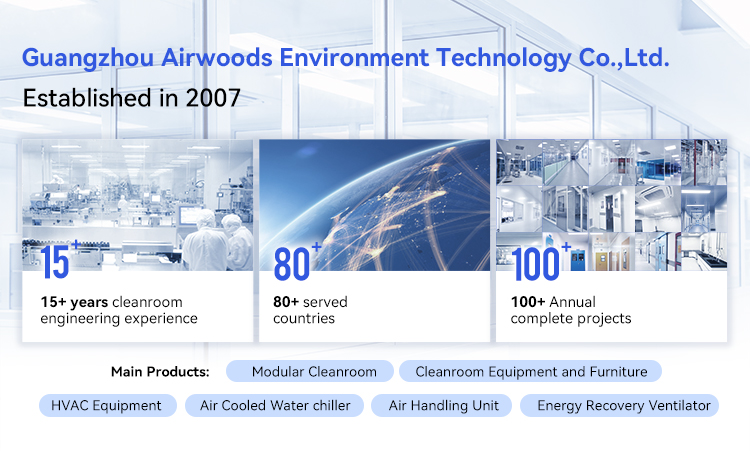
Airwoods: Your Trusted Partner for Hospital Cleanroom Solutions
Specializing in cleanroom design and HVAC solutions, Airwoods meets the specific needs of healthcare facilities with cutting-edge products and services. With our cleanroom manufacturing expertise, we ensure you can support a sterile, safe environment for patients and medical staff. We offer FFU clean room units, HEPA filters for clean rooms, cleanroom particle counters and clean room testing services.
Whether it's a modular clean room, softwall cleanroom, or mobile clean room, Airwoods is committed to delivering clean room certifications and meeting the ISO cleanroom standards for various classifications such as ISO 7 cleanroom requirements and ISO class 8 cleanroom specifications. We ensure all areas comply with clean room ISO classification standards and provide ongoing support for cleanroom testing and cleanroom certification.
Here's how cleanrooms contribute to pharmaceutical compounding and production of sterile medical devices:
• Controlled environment:
Specific environmental conditions such as temperature, humidity and air pressure are maintained in cleanrooms as these conditions are very critical in making sure that pharmaceuticals and medical devices are sterilized and are not degrading. By maintaining these parameters precisely, the risk of degradation, chemical reactions, and growth of microorganisms is minimized. This sterile and safe area is made running includes proper cleanroom panels and clean room wall panels.
• Air filtration:
To remove dust, flower pollen, bacteria, viruses, and other microorganisms from the air, clean rooms use high-efficiency particulate air (HEPA) filters (up to 99.97% efficiency) designed for clean rooms. Every tariff and subtilty was one Obtains a clear cut and syntax-free environment make medicines and medical instruments. HEPA filters created for clean rooms trap incredibly small particles present in the air, making them a remarkable choice for keeping air quality high.
• Sterile surfaces:
Walls, floors, and equipment in the clean-room area are made of easy-to-clean and disinfect materials. This ensures that no contaminants accumulate and a sterile environment is maintained for processing and handling sterile products. In addition, cleanroom flooring and cleanroom gowning procedures are critical to maintaining a sterile environment.
• Controlled access:
Access to cleanrooms is limited to only authorized personnel. This decreases the chance of contamination because no untrained personnel can get into the sterile areas. Another important function of controlled access is that it keeps the environment contamination free, which is especially critical for sensitive areas such as the pharmaceutical–clean room.
• Monitoring and control:
Largely environmental control is done using advanced monitoring systems that constantly monitor the environmental conditions, air quality, and other important measures in cleanrooms. This enables you to immediately spot and rectify any deviations from predetermined standards and will contribute to clean room testing, as well as ensuring that the cleanroom remains compliant with the clean room certification.
• Pressurization:
To keep dangerous bacteria and organisms homes in the right housing you want pressurization. To ensure airflow went where it was needed, particularly to counteract the tendency for air to leak in from surrounding areas, hospital cleanrooms used pressure. Operating rooms make use of similar devices called Positive Pressure Rooms which, when breached, ensures that air pushes outside to prevent any contaminated hospital clean room air from getting into the sterile environment.
• Humidity:
Humidity is another key variable that must be managed in some hospital cleanrooms. Humidity levels, for example, can impact blood coagulation, anesthetic gases and even some electrical equipment in an operating room environment. Controlling humidity accurately in hospital cleanrooms is essential to reduce interruptions and create a safe climate for patients and medical providers.
• Airflow:
Hospital cleanrooms control airflow direction, velocity, and volume. In cleanroom manufacturing spaces, proper airflow arrangements allow effective ventilation that helps maintain the integrity of sterile environments.
• HEPA and ULPA filtration:
HEPA and ULPA filtration is used in hospital cleanrooms to ensure the air quality is within the limits allowed by ISO 7 clean room or ISO 8 cleanroom. They trap these elements that would otherwise be too tiny to be caught by regular filtration methods, resulting in a cleaner and lessharmless area overall.
If you are interested in improving or implementing hospital cleanroom facilities in your healthcare space, you will want to work with professionals who are familiar and knowledgeable with the intricacies of cleanroom technology. Airwoods Cleanrooms expertise helps medical device manufacturers and healthcare providers. Airwoods Cleanrooms engineers have more than 16 years of practical experience in the design of clean spaces. Providing full-service solutions from conception to construction, so you can be confident that your clean room panels, and cleanroom flooring, will meet your cleanroom standards. At ISO, we are committed to quality, including ISO cleanroom certifications and clean room testing. Contact us today for a custom quote!
Reasons why clean rooms are very beneficial for hospitals:
• Lower risk of hospital-acquired infections (HAIs)
• Enhanced quality of medicines and medical devices
• Increased patient safety
• Lowered costs related to product recalls, adverse events
The importance of cleanroom design and technology in modern hospitals cannot be overstated. They are a key to manufacturing safe and effective sterile pharmaceuticals and medical devices. Now, with proper airflow isolation and clean room ventilation such as HEPA filters along with clean room testing, hospitals clean room can be a much safer environment for patients and all hospital personnel.
So where do you start?
Designing a pharmacy clean room or cleanroom manufacturing facility is not the simplest of herculean tasks. Airwoods Teams, your partner, is with you every step of the way. From concept to commissioning, ISO 7 clean room requirements, ISO 8 clean room, clean room certification, and owner training, our team is prepared to develop the appropriate hospital environment to support your process, your cleanroom technology, and above all, your patients. With the experience, design capabilities, and training level, our team of experts can design-build and deliver on your next class 100 cleanroom or other mission-critical projects.


