
Introduction
Central air conditioning and cleanroom HVAC systems are widely used in many industries. Among all maintenance items, air filters usually require the most frequent servicing and account for a significant share of consumable costs. To use these consumables more economically, it is important to understand the basic specifications and application characteristics of each filter grade. This article reviews the most commonly used air filters.
I. Filter Classification
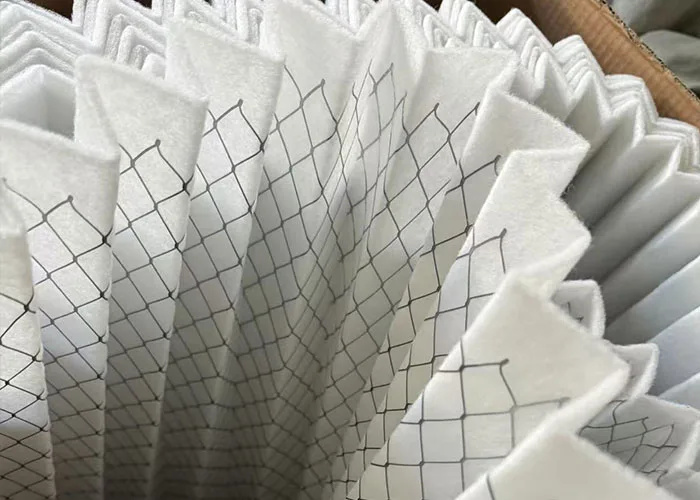
- 1. Primary Air Filters
Primary air filters are classified into four grades: G1, G2, G3, and G4. They remove particles with a size of 5 μm or larger, based on the gravimetric method.
G1: Filtration efficiency below 50%
G2: Filtration efficiency of 50%–65%
G3: Filtration efficiency of 65%–80%
G4: Filtration efficiency of 80%–90%
Common materials include nonwoven fabric, nylon mesh, and metal mesh. These filters are typically installed at fresh air inlets and at the front end of air handling units.
Their main function is to remove large particles such as dust, hair, and willow catkins while protecting downstream medium- and high-efficiency filters.
- 2. Medium-Efficiency Air Filters
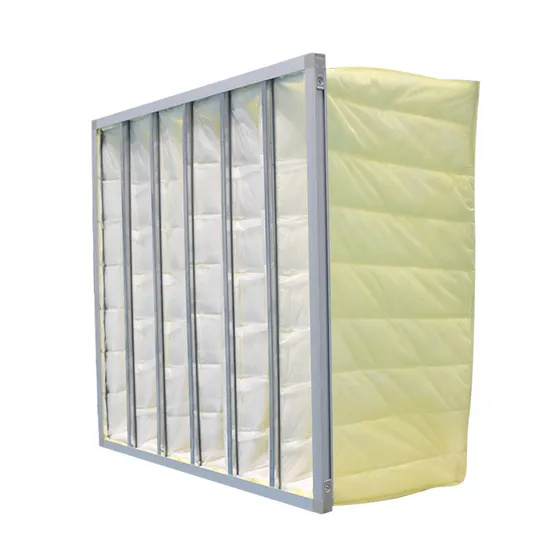
Medium-efficiency air filters are classified into five grades: F5, F6, F7, F8, and F9. They remove particles with a size of 1 μm or larger, based on the colorimetric method.
F5: Filtration efficiency of 40%–60%
F6: Filtration efficiency of 60%–80%
F7: Filtration efficiency of 80%–90%
F8: Filtration efficiency of 90%–95%
F9: Filtration efficiency of 95%–98%
Common materials include nonwoven fabric and fiberglass. These filters are installed after primary filters and before high-efficiency filters, usually upstream of fans and cooling coils.
Their main function is to remove fine dust, reduce the load on high-efficiency filters, and extend their service life.
- 3. High-Efficiency and Ultra-High-Efficiency Air Filters
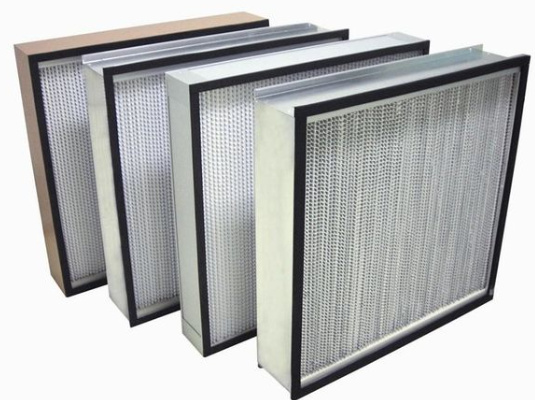
High-efficiency air filters are classified into H10, H11, H12, H13, and H14. They remove particles with a size of 0.3 μm or larger, based on the DOP method.
H10: Filtration efficiency of 85%–95%
H11: Filtration efficiency of 95%–99.5%
H12: Filtration efficiency of 99.50%–99.90%
H13: Filtration efficiency of 99.95%–99.99%
H14: Filtration efficiency of 99.995% or higher
Ultra-high-efficiency air filters include grades U15 to U17, with filtration efficiency of 99.9995% or higher.
High-efficiency filters commonly use ultra-fine fiberglass or PP filter paper. Ultra-high-efficiency filters often use PTFE membranes.
High-efficiency filters are used at the terminal ends of cleanrooms and in biological laboratories. Ultra-high-efficiency filters are used in extremely clean areas, such as semiconductor manufacturing plants.
Their main functions are to remove submicron particles to meet cleanroom requirements and to remove nanoscale particles for ultra-clean environments.
II. Filter Replacement Standards
- 1. Core Evaluation Indicators
The following pressure-drop indicators should be used as the primary replacement criteria:
Primary filters G1–G4 should be replaced when the resistance reaches twice the initial resistance or reaches 150 Pa or higher. The typical initial resistance is 50–80 Pa.
Medium-efficiency filters F5–F9 should be replaced when the resistance reaches twice the initial resistance or reaches 250 Pa or higher. The typical initial resistance is 80–150 Pa.
High-efficiency filters H10–H14 should be replaced when the resistance reaches twice the initial resistance or reaches 450 Pa or higher. The typical initial resistance is 150–250 Pa.
The final resistance of ultra-high-efficiency filters should follow the manufacturer’s requirements. Resistance can be read directly from the differential pressure gauge.
- 2. Reference Replacement Intervals
The following replacement intervals may be used as general references:
Primary filters G1–G4: every 1–3 months
Medium-efficiency filters F5–F9: every 3–6 months
High-efficiency filters H10–H14: every 1–2 years
Ultra-high-efficiency filters U15–U17: every 2–3 years
In harsh environments, the replacement intervals should be shortened:
Primary filters: every 1–2 weeks
Medium-efficiency filters: every 1–3 months
High-efficiency filters: every 6–12 months
Harsh environments mainly refer to dusty areas, construction sites, and applications with high fresh air volumes.
- 3. Special Conditions Requiring Immediate Replacement
Filters should be replaced immediately if any of the following conditions occur:
- The filter surface changes significantly, including obvious blackening, mold, or unpleasant odors that cannot be removed by cleaning.
- The filter becomes damaged or deformed, resulting in air leakage. High-efficiency filters should undergo leakage testing and must be replaced immediately if the leakage exceeds the allowable limit.
- The cleanroom fails to meet its required cleanliness level, and investigation confirms that the filter’s efficiency has deteriorated.
- The air volume decreases by more than 15% while the pressure drop has not yet reached the final resistance. In this case, the filter should be checked for blockage.
III. Replacement Precautions
Primary filters made from washable materials can usually be cleaned and reused. However, they should not be washed more than twice. After cleaning, their service life will be significantly reduced. Any damaged primary filter should be replaced immediately.
When replacing high-efficiency or ultra-high-efficiency filters, the installation area must be kept clean to prevent contamination of the filter media. The filter must be properly sealed during installation, and air leakage is not permitted.
Filter replacement intervals should be adjusted according to the actual operating environment, fresh air volume, and dust generation level. Cleanrooms should regularly record differential pressure and air velocity data and maintain the necessary operating records.
Post time: Aug-28-2026


